■NUMERO DEUX exhibition 2025 / TOSHIHIKO SHIBUYA 「うつろい」Between Nature and Art with music
7月27日(日)~ 8月3日(日)13:00-18:00(初日14:00~) (最終日~16:30)
Gallery&Shop 馬と獅子 / 藻岩山のふもとにある展示ギャラリー
*Opening Live 初日 7月27日(日) 15:30~16:00
即興演奏家、Keiko Aphrodine(富山惠子)さんをお招きし、作品空間から受けるインスピレーションをアイリッシュハープで即興演奏をして頂きます。こちらも、是非お楽しみください。(入場無料)
企画協力 石川伸一(まちづくりプランナー / NUMERO DEUX)
「始まりの時・Sprouting」シリーズのオブジェの近作、新作を合わせて展示致します。また、澁谷俊彦のライフワーク;ホワイトコレクションの様々な綿毛や2025年早春の藻岩山麓で収集した残雪の下の贈り物(野良ニンジンの花, シナノキの果実と苞葉、透かし葉、山葡萄の蔓、オニグルミ、など)も展示致します。 アートと自然のうつろいを(藻岩山のふもとにある、ここ)馬と獅子ギャラリーにて、今までとはまた異なる唯一無二な耽美な空間に創造します。
The exhibition will feature recent and new objects from the "Sprouting: The Beginning of Time" series. Also on display will be various fluffs from Shibuya Toshihiko's life's work, the White Collection, as well as gifts found beneath the remaining snow collected at the foot of Mt. Moiwa in early spring 2025 (wild carrot flowers, linden fruits and bracts, openwork leaves, wild grape vines, Japanese walnuts, etc.). The transitions between art and nature will be expressed in a unique and aesthetic space different from anything seen before at the Uma to Shishi Gallery (here, at the foot of Mt. Moiwa).

澁谷さんは、冬や雪といった北国特有の自然環境と向き合いながら、自然との共生や場との共鳴を試みてきた美術家です。
本展では、透かし葉(雪に埋もれた枯れ葉が腐食して葉脈だけ残ったもの)や、白くなったオニグルミの殻(冬眠しないエゾリスやエゾアカネズミの食痕)など、約4か月のあいだ雪に埋もれて変化した自然物たちが展示されています。作家自身が早春の藻岩山麓で採集したそれらは、足元に潜んで見逃されがちな生命の循環や共存・共生の痕跡を記録する標本作品として、森のうつろいや小さな生態系の物語を想起させます。また、赤い絨毯の上に置かれた《Black Dragon/黒龍》は、五行思想において北方・冬を守護する龍神で、自然を乱す者に気象で戒めを与えるとされる存在の名を冠した作品です。あわせて展示された《古代蓮/奇跡の再生》は、1971年に埼玉で出土した約2000年前の蓮の種子が自然発芽し、一斉に開花した事例に着想を得ています。自然と人との関係を、神話的・歴史的な時間軸から捉える視点が提示され、ギャラリーの耽美な空間とも響き合っていました。 矢倉あゆみ (アートコーディネーター)

Shibuya is an artist who has explored the natural environment of northern Japan, such as winter and snow, while attempting to coexist with nature and resonate with the place.
This exhibition features natural objects that have been transformed by being buried in snow for approximately four months, such as openwork leaves (dead leaves buried under snow that have decayed, leaving only the veins) and bleached walnut shells (food marks left by Hokkaido squirrels and Hokkaido field mice, which do not hibernate).
Collected by the artist himself in early spring at the foot of Mt. Moiwa, these specimens record traces of the cycle of life and coexistence that often hide beneath our feet and evoke the changing times of the forest and the story of a small ecosystem.
Furthermore, Black Dragon, placed on a red carpet, is named after the dragon god who protects the north and winter in the five elements philosophy, and is said to use weather to admonish those who disturb nature. The accompanying work, Ancient Lotus/Miraculous Rebirth, was inspired by the example of approximately 2,000-year-old lotus seeds unearthed in Saitama in 1971, which spontaneously germinated and bloomed en masse.
The work presented a perspective that captures the relationship between nature and humans from a mythological and historical timeline, resonating beautifully with the aesthetic space of the gallery. Ayumi Yakura. Art Coordinator


【古代蓮 /奇跡の再生】
1971年、埼玉県行田市の公共施設建設工事の際に、偶然出土した種子が自然発芽し甦り、池に開花しているのが発見されました。地中深く眠っていた多くの蓮の実が出土し、自然発芽して一斉に開花した事は極めて珍しいことといわれています。 今から約2000年前、この一帯はたくさんの水生植物が茂る湿地帯でした。そこには、蓮の花も咲いていました。そのとき咲いていた蓮の実が地中深くもぐり、再び、陽射しをあびるまでの長い眠りにつきました。行田市は新しい焼却場施設を建設するための造成工事をはじめた際に、掘削によってできた場所に水が溜まり池となり、地中深く眠っていた蓮の実が静かに目覚めたのです。
Ancient lotus/miraculous rebirth
In 1971, during construction of a public facility in Gyoda city, Saitama Prefecture, it was discovered that a seed that had been unearthed by chance had naturally germinated and revived, blooming in a pond. It is said to be extremely rare that so many lotus seeds that had been sleeping deep underground were unearthed, naturally germinated, and bloomed all at once. About 2,000 years ago, this area was a wetland with many aquatic plants. Lotus flowers were also blooming there. The lotus seeds that were blooming at that time went deep underground and went into a long sleep until they were exposed to sunlight again. When Gyoda city began construction work to build a new incineration facility, water accumulated in the area created by the excavation, forming
a pond, and the lotus seeds that had been sleeping deep underground quietly woke up.

【エゾリスの頭骨とオニグルミの殻、そしてカラスの羽根】
エゾリスは冬眠をしない。晩秋に冬に備えて木の実を集める。半分に割られたオニグルミの殻はエゾリスの食べたもの。そして、殻に丸く開けられた穴は、エゾアカネズミが食した痕跡。そして彼らの天敵はキツネやカラスなど。カラスは、リスの巣を荒らし子リスを狙うだけでなく、成獣も襲うことがある。
[A Hokkaido squirrel skull, walnut shells, and crow feathers]
Hokkaido squirrels do not hibernate. In late autumn they gather nuts in preparation for winter. The shell of a walnut split in half is what a Hokkaido squirrel has eaten.
The round hole in the shell is evidence that a Hokkaido mouse has eaten it. Their natural enemies include foxes and crows. Crows will raid squirrel nests and eat the baby squirrels.
And they sometimes attack adult squirrels.
【透かし葉】 Skeleton leaf
葉の葉肉が腐食によって、葉脈だけが残った状態のこと。
北海道では雪に埋もれた枯れ葉が腐食してこのような状態に
なることがある。 In Hokkaido, dead leaves buried under snow can rot and become like this.
【新月のお供物】 New moon offerings
満月の供え物として一般的なのは、月見団子。月見団子は満月に見立てたもの。供え物は、月を愛でるだけでなく、豊作を祈願し、自然への感謝を表す。私は新月のお供物として、発芽を祈願して、タンポポの綿毛を捧げることにした。
“Tsukimi dango” is a common offering for the full moon.
These are meant to represent the full moon. Offerings are not only for appreciating the moon,
But, also for praying for a good harvest and expressing gratitude to nature.
I decided to offer dandelion fluff as an offering for the new moon, praying for germination.
【透かし葉と新芽の枝】
早春の景色は晩秋から冬を挟んで生まれる。 冬とは、二季の通いである。The scenery of early spring is born between late autumn and winter.

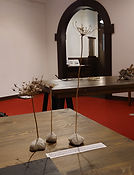
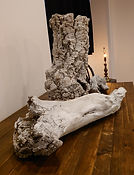
作家の部屋 / 招かれたアート
ギャラリーという場は、多くの場合、展示された作品から一歩引いた中立の空気を漂わせている。作家にとっても観客にとっても、そこは確かに作品が置かれる場所であるけれど、同時に作品とは切り離された「別の世界」である。 その関係はどこかドライで、澄ました距離感をまとっている|けれども今回の澁谷俊彦の個展は、まるで彼の私的な「部屋」へと招かれたような体験であった。 ギャラリーの赤い絨毯やクラシックな調度が、そのまま作家の個室へと姿を変え、空間は「展示の場」から「作家の私的気配のある場所」へとしなやかに変容した| 作品に添えられたキャプションも効果的で、そして何よりも渋谷の表現そのものの強度を持った美しさが、個室を感じさせても場を弛緩させることなく、心地よい緊張を生み出していた|観客は、作家がそこに在るときには気軽に声を交わし、彼が不在のときには、ふとその部屋を覗き込んでしまったような親密な感覚に包まれたのではないだろうか|初日を飾った富山惠子によるハープの即興演奏も、特別な彩りというより、むしろ昔からそこにあったかのように自然に溶け込み、空間に馴染んでいた|展示された作品群は新作から過去の軌跡まで、渋谷の作家としてもワーク・ライフを映し出すように多彩で、展示に奥行きを与えていた。それは単なる作品の集積ではなく、作家の時間と生の呼吸を感じさせる構成であった。次の企画は「冬」だろうか。楽しみである。 石川伸一/まちづくりプランナー、NUMERO DEUX
An Artist's Room / Invited Art
Galleries often exude a neutral atmosphere, standing a step back from the exhibited works. For both the artist and the viewer, the gallery is certainly a place where the works are displayed, but at the same time, it is a "different world" separate from the artworks themselves. This relationship is somewhat dry, shrouded in a discreet sense of distance. However, Toshihiko Shibuya's recent solo exhibition felt like an invitation into his private "room." The gallery's red carpet and classic furnishings transformed into the artist's private office, gracefully transforming the space from an "exhibition space" to a "place brimming with the artist's personal presence." The captions accompanying the works were effective, and above all, the intense beauty of Shibuya's artistic expression itself created a comfortable tension without loosening the atmosphere, even while giving the impression of a private room. When the artist was there, the audience casually exchanged words, and when he was absent, they were enveloped in an intimate sense of peering into his room. The opening night's impromptu harp performance by Keiko Toyama blended seamlessly into the space, rather than being a special addition, as if it had been there for ages. The diverse range of works on display, from new to past works, reflected Shibuya's work life as an artist, adding depth to the exhibition. It was not simply a collection of works; it was a composition that evoked the artist's time and life. Perhaps the next project will be "winter." I'm looking forward to it.
Shinichi Ishikawa / Urban Development Planner, NUMERO DEUX

鉄と光の芸術祭2024 ムロランアートプロジェクト M・A・P
会場:旧絵鞆小学校 室蘭市
会期:2024.9.7(土)8(日) 14(土) 15(日) 16(月・祝)21(土)22(日)23(月・祝)【8日間】
円形校舎の二階、扇型の音楽室を担当致しました。室蘭で生まれ、幼少の頃の記憶と想い出、そして天然の良港としての室蘭半島の地形的特徴と地理的な要所(測量山と頂上の6本の鉄塔等々)を下敷きに円形ユニットを配置しました。
"Steel and Light Art Festival 2024" / MURORAN ART PROJECT
venue: Former Etomo Elementary School, the second floor of the circular school building, and the fan-shaped music room .
I was born in Muroran, and I arranged the circular units based on my childhood memories and recollections, as well as the topographical features and geographical key points of the Muroran Peninsula as a natural harbor.


旧絵鞆小学校の外観 (室蘭市)
「澁谷俊彦氏を追って、日本の沿岸の2つの展覧会の息を呑むような舞台を巡る」
https://www.artbooms.com/blog/toshihiko-shibuya-mururan?rq=toshihiko%20shibuya
The port town of Muroran, in the southeastern part of the island of Hokkaido (the northernmost of the Japanese archipelago), is also a small industrial center that has chemical and iron and steel plants, squeezed between the ocean and the high mountains, sometimes located directly overlooking the sea. The views, however, have not been irretrievably ruined by the factories, which at night, together with the port, emit hundreds of colored lights and amaze tourists. While observation platforms nestled among the rocks give unspoilt glimpses of the coast. A reflection of those colorful lights, of that attempt to find a balance between the work of man and nature, can still be seen now in the work of Toshihiko Shibuya, who was born in Muroran.
“I strongly want the city to shine again in the future,” he said in an interview that Artbooms will publish in full next week.
北海道(日本列島最北端)の南東部にある港町室蘭は、化学工場や鉄鋼工場のある小さな工業の中心地でもあり、海と高い山々に挟まれ、時には海を直接見下ろす場所に位置しています。しかし、工場によって景観が取り返しのつかないほど損なわれているわけではなく、夜になると港とともに何百もの色とりどりの光を放ち、観光客を驚かせます。岩の間にある展望台からは、海岸の手つかずの姿を垣間見ることができます。人間の営みと自然のバランスを見つけようとするその試み、その色とりどりの光の反映は、室蘭生まれの澁谷俊彦の作品に今も見ることができます。「将来、この街が再び輝くことを強く望んでいます」と、来週Artboomsが全文掲載するインタビューで彼は語りました。
The artist, who has long lived in Sapporo, marks his production according to seasonal rhythms and most of the time realizes minimal installations in the heart of the forest or a city park trying to intervene as little as possible on the beauty of the landscape and to make sculpture an extension of the latter. His work speaks of memory, identity and ecology. It is also a cocktail of influences from the visual arts, design and architecture sectors. Japanese and Westerners.
Last summer the Japanese artist took part in two group exhibitions on the same stretch of ocean coast south of Sapporo. One in Muroran ("Fort and Light Art Festival 2024"), and one in the not far Tomakomai ("Ikoro Forest Meets Art 2024"). In both of these exhibitions his work appeared a bit different than usual. Perhaps engaged in a slow and imperceptible metamorphosis.
On the other hand, at the center of Mr. Shibuya’s interests there are precisely the circular transience of existence and the tireless rebirth of similar but multiform forms of life in a constant process of change, in which everything, cathopardesically, changes to always remain the same. And in this picture, talking about metamorphosis can be deceptive. For sure, however, in Mururan the artist has created an intimate, measured, nostalgic and vibrant installation, which deviates from the usual rhetoric, reusing only the supports of his famous “Snow Pallet”.
札幌に長く住んでいるこのアーティストは、季節のリズムに合わせて作品を制作し、ほとんどの場合、森の中心や都市公園で最小限のインスタレーションを実現し、景観の美しさにできるだけ干渉せず、彫刻を景観の延長にしようとしています。彼の作品は、記憶、アイデンティティ、エコロジーについて語っています。また、視覚芸術、デザイン、建築の分野からの影響のカクテルでもあります。日本人と西洋人。
この夏、この日本人アーティストは、札幌南部の同じ海岸沿いで2つのグループ展に参加しました。1つは室蘭(「鉄と光の芸術祭2024」)、もう1つはそれほど遠くない苫小牧(「イコロの森ミーツアート2024」)でした。これらの展覧会の両方で、彼の作品はいつもとは少し違って見えました。おそらく、ゆっくりと目に見えない変容を遂げているのでしょう。
一方、澁谷氏の関心の中心にあるのは、まさに存在の循環的なはかなさと、絶え間ない変化の過程における類似しながらも多様な生命体のたゆまぬ再生であり、その中ではすべてが陰極的に変化し、常に同じままである。そしてこの絵において、変態について語ることは誤解を招く可能性がある。しかし、確かに、このアーティストは、有名な「スノーパレット」の支持体のみを再利用し、通常のレトリックから逸脱した、親密で、慎重で、ノスタルジックで、活気に満ちたインスタレーションを「室蘭」で生み出した。
Toshihiko Shibuya, in fact, all winters for over 15 years, installs temporary public works intended to intercept the snowfall (to Hokkaido, not far from Russia, are abundant) and to emphasize the change of the landscape to the spring thaw. The title of these site-specific sculptures (“Snow Pallet”) alludes to the supports used. Minimal and colorful in sections not visible, these small pallets not dissimilar from elegant tables, as well as to welcome the snow make it colorful with the reflections of the bright tones, fluorescent moments, of which they are partially covered. In general, precisely because of this scenographic effect, guaranteed by the meeting of snowflakes with the paints used by the artist, the elements that make up “Snow Pallet” in the other periods of the year end up in the warehouse (sometimes have also been used on bodies of water, without achieving the dramatic results of winter and in different contexts but rarely).
It did not go like this in the particular circular building that housed the Etomo elementary school in Mururan. There Shibuya used many supports of different heights, concentrating them in the center of the music classroom (with the musical notes in paper still hanging on the pastel-colored walls, despite the school closed its doors in 2015) to take advantage of the light of the large windows and managed to project intense shades from one element of the work to another.
“I used as the room of fan-shaped music on the second floor of this school building and reused the pieces of “Snow Pallet”, which mainly present shaded colors that appear thanks to the reflection of sunlight as natural energy.”
To see them they make us think of large glittering sequins, the reasons that designers imprint in the facades or showcases of Tokyo’s flagship stores, electronic screens, the lights of the city industries but also a stylized archipelago. In the snow of course (but maybe this is just a suggestion). And, in fact, the small pallets were arranged to simulate portions of territory seen from above.
"Overlapping - he said - the shape of the floor of the room on a map of the district of Muroran West, I imagined the object as a mountain called "Sokuryozan" and I expressed the six television towers that stand on top, the characteristic places of the peninsula, the stations and the other city nodes through an arrangement of abstract objects. We tried to create a space that would entrust the future of the city to itself.”
The attempt to give substance to natural light, modifying it simply according to the rules of refraction and perception, on an imaginary map, in the middle of a space apparently destined for childhood, make "Illusion of Color" (as the installation is called) vaguely visionary and veined with nostalgia. Speaking about Mururan Shibuya: “In the past it was a bustling port city, known for the production of steel and the commercial port that moved iron and coal, but the city’s population has diminished and now it is not that the spectrum what it once was. But it’s working and trying to switch from fossil fuels to carbon neutrality.”
澁谷俊彦は、実は15年以上もの間、毎年冬になると、降雪を利用し(ロシアから遠くない北海道では雪が豊富)、春の雪解けへの風景の変化を強調することを目的とした架設の公共作品を設置しています。これらの場所固有の彫刻のタイトル(「スノーパレット」)は、使用されている支持体に由来しています。これらの小さなパレットは、見えない部分ではミニマルでカラフルで、エレガントなテーブルと似ていますが、部分的に覆われている明るい色調、蛍光色の反射で雪をカラフルに迎えます。一般的に、雪の結晶とアーティストが使用する塗料の出会いによって保証されるこの舞台効果のため、他の時期に「スノーパレット」を構成する要素は倉庫に保管されます(冬のような劇的な結果は得られず、異なる文脈でまれに水域にも使用されることがあります)。
室蘭にある旧絵鞆小学校のあった円形の建物で、澁谷は高さの異なる多くの支柱を音楽教室の中央に集中させ(2015年に閉校となったにもかかわらず、パステルカラーの壁にはまだ音符が紙に貼ってありました)、大きな窓からの光を活用し、作品の要素から要素へと強烈な色合いを投影することに成功しました。
「この校舎の2階を扇形の音楽室として使い、主に太陽光の反射によって自然エネルギーとして現れる陰影のある色を表現する「スノーパレット」のピースを再利用しました。」
それらを見ると、大きなキラキラ光るスパンコール、電子スクリーン、都市産業の明かり、そして様式化された群島を思い起こさせます。もちろん雪の中で(しかし、これは単なる提案かもしれません)。そして実際、小さなパレットは、上から見た領土の一部を模して配置された。
「部屋の床の形を室蘭西地区の地図に重ねて、その物体を『測量山』という山としてイメージし、その上にそびえる6本のテレビ塔、半島の特徴的な場所、駅、その他の都市の結節点を抽象的な物体の配置で表現しました。都市の未来を託すような空間を作ろうとしたのです。」
自然光に実体を与え、屈折と知覚の法則に従って単純に修正するという試みは、想像上の地図上で、明らかに子供時代を過ごすための空間の真ん中で、「色の錯覚」(このインスタレーションの名称)を漠然とした幻想と郷愁にあふれたものにしている。ムルラン渋谷について次のように語っている。「かつては鉄鋼の生産と鉄と石炭を輸送する商業港として知られ、活気のある港町でしたが、都市の人口は減少し、今ではかつてのようなスペクトルではありません。しかし、化石燃料からカーボンニュートラルへの転換に取り組んでいます。」
There is no trace of these feelings in the work he created for “Ik oro Forest Meets Art 2024” (to which he had already participated in other times) even if the small pallets of “Snow Pallet” also used them on this occasion.
During the event, the artists exhibit directly in the forest not far from Tomakomai, establishing a frontal dialogue with unspoiled nature and alluding to the traditional Japanese practice of the ‘Shinrin yoku’ (or ‘bath in the forest’, that is, walking in the woods to recover the psycho-physical balance). The sculpture of Mr. Shibuya among the secular trees of Ikoro was particularly cheerful and vital. A real proliferation of small spheres that in addition to remember tadpoles, mushrooms, bunches of tiny eggs, mucillaggini and anything else, as it always does, this time also evoked the flights of fireflies and white butterflies. Thanks to the white lacquered metal sticks (which combined with other components give life to the snow supports), on which the artist of Sapporo has placed balls While on the ground wire, among the globose drawing pins, the small pallets in full have become a comfortable shelter for the animals (or rather a nursey since some of them have laid eggs there).
“I would be very happy if the objects could become a place where animals can grow their puppies.”
彼が「イコロの森ミーツ アート 2024」(以前も参加していた)のために制作した作品には、こうした感情の痕跡はまったく見られない。ただし、このときも「スノー パレット」の小さなパレットがそれらの感情を作品に使用していた。イベント中、アーティストたちは苫小牧からほど近い森の中で直接展示を行い、手つかずの自然と正面から対話し、日本の伝統的な慣習である「森林浴」(森の中を歩いて心身のバランスを取り戻すこと)をほのめかしている。イコロの世俗的な木々に囲まれた渋谷氏の彫刻は、特に明るく活気に満ちていた。小さな球体が本当に増殖し、いつものようにオタマジャクシ、キノコ、小さな卵の塊、変形菌、粘菌など、あらゆるものを思い起こさせるだけでなく、今回はホタルや白い蝶の飛翔も呼び起こした。札幌のアーティストが、地上の電線の上にボールを置いた白い漆塗りの金属棒(他の部品と組み合わせることで雪の支えに命を吹き込む)のおかげで、球形の画鋲の間に小さなパレット全体が動物たちの快適な隠れ家(卵を産んだ動物もいるので、むしろ保育所)になりました。
「このオブジェが動物たちの子犬を育てる場所になればとても嬉しいです。」
Speaking about the supports, he said: “These objects serve as a mask against the accumulation of snow in winter, but if spring comes and they are installed repeatedly over the years, they will eventually be absorbed by nature.” A similar statement to those of some architects about buildings, which explains the approach to the artist’s sculpture, as well as his particular sensitivity to the environment. But also the spirit of celebration of life, of careful observation and joy in the constant discovery that animates these interventions.
Toshihiko Shibuya, however, with his work also affirms a radical message. It is as if he told us, in fact, that human creativity is very little in the face of the unpredictable and constant renewal of creation and that to this fact must adapt.
支柱について、彼はこう語った。「これらのオブジェは、冬には積雪に対する支持体として機能しますが、春が来て何年も繰り返し設置されれば、最終的には自然に吸収されます。」 これは、一部の建築家が建物について述べたことと似た発言であり、アーティストの彫刻へのアプローチと、環境に対する彼の特別な感受性を説明しています。しかし、これらの介入を活気づける、人生を祝福し、注意深く観察し、絶え間ない発見を楽しむ精神もあります。
しかし、澁谷俊彦は、彼の作品で厳しいメッセージも主張しています。それはあたかも、予測不可能で絶え間ない創自然風化と植物たちの繁殖の前では人間の創造性はほとんどなく、この事実に適応しなければならないと私たちに伝えているかのようです。
CROSS WINDⅡ
ART X-WINTER ART (2014.November-2015.February)
会期:2014年11月1日―2015年2月28日
会場:クロスホテル札幌 エントランス
2011年12月に発表したCROSS WINDの発展形である“CROSS WINDⅡ”を再びクロスホテル・エントランスで発表します。80本の風で揺れる木々を思わせるオブジェはエントランスを冬のガーデンへと変貌させます。どんな強風にも折れない柔軟な構造はその素材であるグラスファイバーの芯材とそれを覆う発泡ウレタンの二重構造にあります。芯材に施した蛍光塗料の塗布面が多孔質ゆえに発泡ウレタンを透過して淡い色調のグラデーションとして表面に現れます。また今回の新しい試みとして内部に挿入されたLED照明によって、日没後は昼間とは印象の異なる景色をご覧いただけます。風に揺れるオブジェの設置されたエントランスの景色をお楽しみください。
ART X-WINTER ART 2014. November-2015. February
Date:November 1st 2014 -February 28th 2015
Place:Cross Hotel Sapporo
I created the winter garden in the entrance of Cross Hotel. It is the “Cross Wind 2”.
The object would not collapse by any strong winds, it is made a dual structure with glass fiber as the core and the core covered with urethane foam. The work shows a pastel color tone through the covered urethane foam because the core is painted with fluorescent paint, creating a color effect that is impossible to achieve if adopting hard material. As a new attempt, I attached LED lights to the tip of art objects. You can look at the different scene from the evening.

Dance of the Wind
■アルタイルの庭-JRタワー・アートプラネッツ2012 楽しい現代美術入門-
会期:2012年6月30日(土)~7月22日(日)
会場:札幌エスタ11F プラニスホール、そらのガーデン
そらのガーデン(プラニスホール)で開催中の「アルタイルの庭」。実質ここは私だけの展示空間となったため、他者との関係性で作品が影響を受けるのではなく、ひたすら、ビル風との関係と太陽光と夜の人工照明との関わりで作品が変化するわけです。作品が単独で存在するのではなく、環境と共存することが今の大きなテーマです。四季を通じて あらゆる自然環境(または人工的な空間も含めて)と共存・共生出来ることを目指します。
“Dance of The Wind” was held in a roof garden at JR tower building in July.
I displayed objects right under down lights, here. My objects shined by an effect of these illuminations vividly from the evening. The work shows a pastel color tone through the covered urethane foam because the core is painted with luminous paint, creating a color effect that is impossible to achieve if adopting hard material. I suppose the reason why the object looks white under a blue and bright sky, and looks blue under a cloudy sky and at dusk is because of the change of wavelength of sunlight.

クリエイティブ北海道 meets 香港
2013年11月29日~12月8日
セントラルオアシスギャラリー、香港
クリエイティブディレクション クラークギャラリー+SHIFT
協力 札幌市、北海道運輸局、クロスホテル札幌、ヒルトン・ニセコ・ビレッジ、小樽観光協会
本プロモーションは去年に続き香港で開催されるデザインイベント「DETOUR」とのタイアップで開催されました。私の作品は「ホワイトスネーク」。
CREATIVE HOKKAIDO MEETS HONG KONG
“CREATIVE HOKKAIDO” is a project that introduces new attractive creative culture from Hokkaido nationally and internationally. My work is the "White snake". In this event, Clark Gallery + SHIFT presents artworks by Toshihiko Shibuya and Takanori Isago. Following the same format as last year, the exhibition will be shown in tie-up with the design event “DETOUR” from November 29th to December 8th.

-The White Butterfly-
クリエイティブ北海道 meets 香港
2012年11月30日~12月16日 8:00~22:00(展示)
オアシスギャラリー、元ワンチャイ警察署、プリンシパル
クリエイティブディレクション:クラークギャラリー+SHIFT
協力:札幌市、北海道運輸局、フード特区機構、北海道新聞社、クロスホテル札幌、ヒルトン・ニセコ・ビレッジ、山ト 小笠原商店、ノースカントリー・ゴルフ倶楽部
"The white butterfly"
Creative Hokkaido meets Hong Kong
Date: November 30th - December 16th, 2012
Place: Central Oasis Gallery, Former Wan Chai Police Station, The Principal
Creative direction: Clark Gallery + SHIFT
Supported by City of Sapporo, Hokkaido District Transport Bureau, Hokkaido Food Industry Promotion Organization, Hokkaido Shinbun Press, Cross Hotel Sapporo, Hilton Niseko Village, North Country Golf Club
※「ホワイトバタフライ」は、私の作品の中でも最も具象的なものの1つです。
私は子供のころ、冬に白い蝶々を観た記憶があります。
それは珍しく暖かい冬の夜、白い蝶が舞うような牡丹雪の降る景色です。
そんなイメージを具現化してみました。
白い標本箱(ボックスフレーム)には蝶が空を舞うイメージで配置してあります。
蝶の造形は敢えて単純な構造とし、蛍光紙を用いて反射光を主役としています。
モチーフの蝶のフォルムは幻想の想像物ではなく、北海道に生息する実在の蝶のかたちを
造形しています。冬の北海道では舞う蝶の如き雪降る景色を眺めることが出来ます。
"The white butterfly" is one of the most concrete works in my work.
I remember that I watched butterflies in winter of Hokkaido in my childhood.
I saw the state that large snowflakes fell as if white butterflies dance at unusually warm winter night.
This work expresses such that image.
In the frame of a white box, the butterflies arranged it to fly in the sky.
Molding of the butterflies are simple paperwork using the luminous papers.
These are not butterflies of the fantasies.
These mold the form of actual butterflies inhabiting Hokkaido.
We can look at the snowy falling scenery such as the butterflies in winter in Hokkaido.


茶室 DE アート 2011
2011年7月16日~7月18日
紅桜公園 茶室寿光庵(札幌)
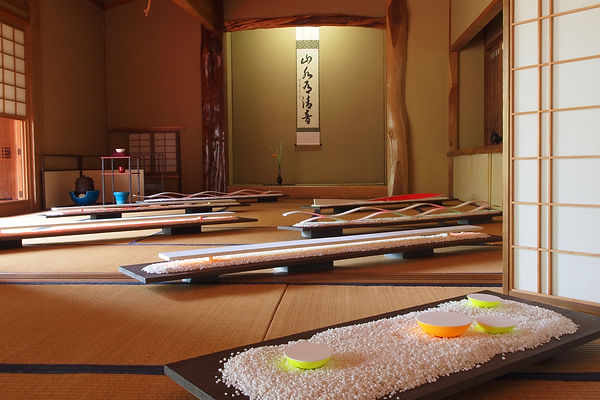
今回の茶室はこの1年間の反射光をテーマにしたインスタ レーションの各パーツを1つ1つ作品として鑑賞してもらうためのものと位置づけてました。そして空間との更なる調和を目指したレイアウトを琴の連弾に見立 てたのです。薄暗い茶室内部でもわずかな自然光によって 影は発光しているかのごとく輝きます。鑑賞者には自然光と蛍光灯との対比も見て頂きました。さらに縁側の毛氈の上には「箱庭四題」(白天狗茸、水鏡・紅 桜、葉蛙、浮島)と名づけたものを配しました。このシリーズはたぶん今回限りの限定版となるでしょう。反射光の支持体を限りなくリアルな具象物に置き換え る試みです。とにかく思いついたものを具現化してみようというこの1年でしたので、このプランもかたちにしておきたかったのです。毛氈の赤色、借景の緑 色、隙間を割るように黒の台座に白砂、(2つは水を配している)そして白いオブジェたちの反射光といった具合です。


http://www.shift.jp.org/ja/blog/2011/06/chashitu-de-art/
http://sapporoartlabo.cocolog-nifty.com/blog/20/08/15bc9f.html
澁谷俊彦展 - 森の雫09 - "茶室DEアート"
2009年7月16~18日
紅桜公園内 茶室寿光庵(札幌)
直接半球状オブジェに触れてもらってその感触を確かめても らう行為は前回同様実施ました。畳の上に座して触れていただく方が日本人には馴染みやすかったでしょう。今回は予想外にお香の香りや雨だれの音、野鳥のさ えずり、風、などの効果が作為的な要素としてではなく演出され、空間が一体のものとなった実感を抱くことが出来ました。 これは多くの鑑賞者の方にも伝 わったようです。非日常空間(美術館、ギャラリーといった既存の展示空間)からの逸脱を図る目的で企画された展覧会でしたが、ある意味忘れかけていた日常 を思い起こす非日常な一時だったのかもしれません。


PLUS1 This Place
2010年9月11日~26日
本郷新記念札幌彫刻美術館 (札幌)
今回の試みは、壁面への積極的展開にあります。思いつくま まに様々な形状を並べてみたイメージが今回の作品タイトル「コンペイトウとメトロポリス」に繋がりました。また、照度を補うための手段として、支持体の2 層構造を試みました


コンペイトウの隠れ家
■北海道立体表現展
会期:2010年5月15日~6月27日 会場:札幌芸術の森美術館
今回、この展覧会に参加するにあたり、自分は何をすべき か。元来の彫刻家、立体造形作家の集団の中で自らの在り方を探り、自らの独自性を見つめなおしました。通常、立体作品は光と影の効果で、その実在感(立体 感)と物質感(材質感)を強調するものですがわたしのそれは、色彩を際立たせることのための手段としてのみ用いています。 絵画の発展形としてのインスタ レーションでありながら、立体でしか表現出来ない反射光によって色彩を主役と捉えた作品です。白い空間にその存在を極力埋没させ、支持体裏面に施された蛍 光塗料の彩色が強いライティングによって会場床面・各支持体表面に鮮やかな反射光を生む仕掛けです。
タイトルの「コンペイトウの隠れ家」には鑑賞者と作品を繋ぐ重要な役割を担っています。反射光の色合いと同色のコンペイトウが実際に幾つか配されることに よって、鑑賞者は覗き込み、作品空間の中へと誘われます。様々な角度からコンペイトウを探す行為を経て、作品の全貌を体感することになるのです。


コンペイトウの隠れ家2010 澁谷俊彦展
会期:2010年8月3日~8日 会場:ギャラリーエッセ
「トンネル型のオブジェ」「箱型オブジェ」「波板状オブジェ」の3種類を新たな要素として取り入れました。「波板状オブジェ」は設置点とその前後に生じる影色の濃淡が美しい。「箱型オブジェ」は、その内部空間が影色に満たされる。 支持体下部には白砂を敷き、フローリングの床面では得られない反射光の効果を考慮しました。全体構成は新たな要素が核となるよう、そして一部を直線状に配置。そこにはランドスケープ的イメージが背景にありました。午後は会場特性である西側の大窓からの外光によって、影色はより輝きを増しわずかな変化で影の彩度が変化するさまは見ていて飽きません。それに反して夜の空間イメージはやや重たく感じたことも否めません。照度の少ない空間での有り様が今後の課題です。

コンペイトウとガラガラへび 澁谷俊彦展
会期:2010年10月6日~14日 会場:茶廊法邑ギャラリー
今回のテーマは ”ガラガラへび”と称した波状プレートの反射光を前面に出したことです。設置点と浮いた箇所では影色にグラデーションが生じて、リズミカルな方向性が生まれます。また石の床面に対して今回は、正方形の支持体の裏面の反射光を得るために、部分的に白円板を配置しました。会場特性である床面の質感を尊重した結果ですが、支持体の配置に今までにはない抑揚が生ま
れました。

蒼い雫09 - II 澁谷俊彦個展
会期:2009年11月9日(月)~14日(日)
会場:MUSEE F (東京/表参道)
2009年最後の展覧会は東京での個展です。
東京では9年ぶりの開催となりました。ここまでホワイトキューブな空間での展覧会は久しぶりです。決して広い空間ではありませんが気に入っております。暫くはここを東京での発表の拠点にしていこうと考えております。

-蒼い雫 09ー 澁谷俊彦個展
2009年3月24日(火)~4月5日(日)
ギャラリーエッセ(札幌)
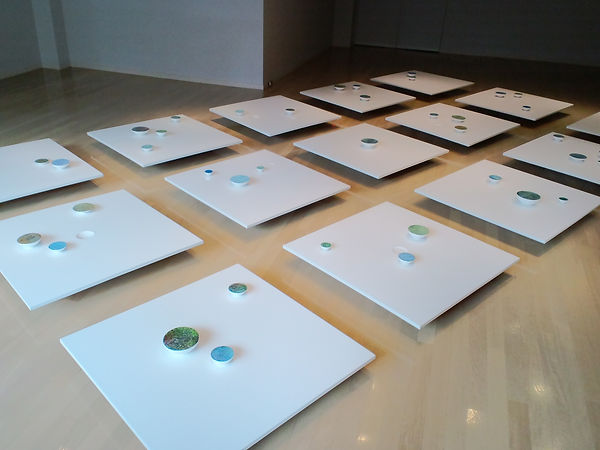
展覧会のテーマは「浮遊感」です。前回の展覧会は柱状オブジェから半球状オブジェ「雫」へのゆるやかなシフトがテーマでしたが、今回は「雫」を全面に主張する内容です。900×900mmのホワイトボードを支持体とし、そこに窪みを形成しました。窪みの中には水をしたためてあり「水溜り」と称しています。支持体の上にはランダムに「雫」が配されています。雪解けの頃のまたは早春の山の斜面や小道の景色を私のフィルターを通して具現化してみました。最初のコンポジションは作家自身による配置ですが、鑑賞者に「雫」を手に持って頂き、その材質、重み、ぬくもりを感じて貰い、新たな場所に再配置して頂くというインタラクティブな展開を試みてみました。故に会期初日から「雫」のコンポジションは少しずつ変化し、最終日にはやや異なる景色へと変貌しました

-森の雫2008ー 澁谷俊彦展
2008年3月4日(火)~3月9日(日)
ギャラリーエッセ(札幌)
ギャラリーエッセの空間の特徴は西側の展示壁面を全て取り除くことが出来ること。そこには道路に面した大きなガラス面(大窓)があること。かねてから外光を空間に取り込むことを希望していた私はこの企画展の要請を快諾しました。以前ギャラリー門馬での個展の際、すりガラス越しの空の模様が敏感に空間を変化させた記憶が印象深かったのです。柱状オブジェの影が床面に落ちることを計算しながら会場を構成していく。結果的に光と影の演出効果は予想を遙かに超えるものとなりました。窓から差し込む太陽光線は床面に落ち、そこからなお反射して壁に光とオブジェの影を映し出す。まさに森の中に差し込む木漏れ日の如き空間となりました。今回のインスタレーションには新たな作品「雫」が加わりました。柱状オブジェの空間から徐々に雫の空間へのシフトしていく構成です。
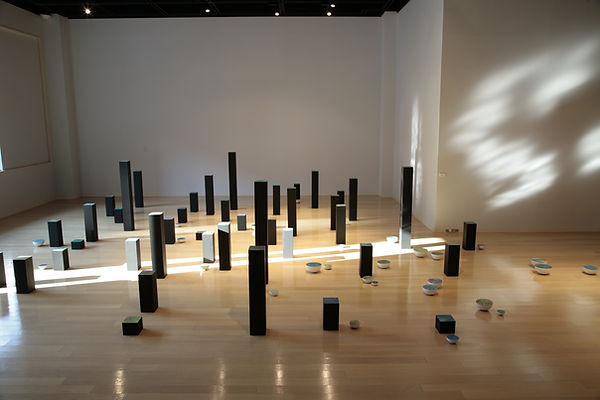
瞑想の森07
■絵画の場合2007
会期:2007年10月20日~11月18日
会場:ポルトギャラリー(札幌)
絵画の場合は絵画の境界線を探る実験の場です。今回の私のアプローチはB会場(3階)ではあえて、狭い空間を選択し両壁面にラバーシートによる作品を84枚ずつ設置し、床面には柱状オブジェを20本をランダムに配しました。CAIでの個展では正面性のあるインスタレーションでしたが、今回は両壁面の作品が視界に入るため、以前とは異なる空間が形成できたのではないでしょうか。また、A会場の1階と中2階を繋ぐ階段部分にあえて作品を設置してみました。これは当初から計画していた空間構成で、鑑賞者の視点の変化を自然に促すためには実に好都合な場なのです。


瞑想の森 澁谷俊彦展
会期:2006年9月23日(土)~10月7日(土)
会場:CAI現代芸術研究所(札幌)
様々な高さの角柱の木口に従来の版表現によって彩色が施されています。日々のうつろいが表現されています。従来の絵画鑑賞と異なる方法論:天地左右からの開放(壁からはずし床置きすることで鑑賞者は全方位から見ることに抵抗を感じない)そして作品と鑑賞者との焦点距離をコントロールすることが可能になる点です。鑑賞者は一本一本の柱状オブジェの木口を見て歩き、あるときは立ち止まり、あるときはうずくまり、森の中を散策したときの記憶がよみがえるかも知れません。
